
Process Automation • 12 min read
The Silent Revenue Killer: Fixing Broken Lead Response Times with AI Agents
Discover how real-time AI lead engagement transforms your sales pipeline and eliminates the hidden costs of slow response times
Every single minute your sales team fails to respond to a new lead, your competitive position erodes. Studies consistently show that companies responding within the first minute capture 391% more qualified leads than those who wait just five minutes. Yet despite these compelling statistics, the average business still takes over 42 hours to follow up with incoming leads. This is not just a performance gap—it is a silent revenue killer that is quietly draining your bottom line. In this comprehensive guide, we explore how lead qualification automation powered by AI agents is revolutionizing the way businesses engage prospects, qualify opportunities, and convert leads at unprecedented speeds.
The Golden Minute: Why Speed to Lead Matters More Than Ever
The concept of the “golden minute” represents the critical window immediately following a prospect’s initial inquiry when they are most engaged and receptive to conversation. During this brief period, potential customers are actively researching, comparing options, and forming opinions. When your business appears at this precise moment, you position yourself as the immediate solution to their needs rather than another option to consider later.
Research from Velocify reveals that contacting a lead within one minute yields conversion rates that are 391% higher than waiting just two minutes. This dramatic difference underscores a fundamental truth about modern buyer behavior: urgency drives decisions. When prospects submit inquiries, they have reached a peak of intent. That intent decays rapidly with each passing hour, often leading to forgotten inquiries or purchases made from competitors who responded faster.
Conversion Rate Drop Based on Response Time
Data visualization showing dramatic conversion rate decline as response time increases
🔑 Key Insight
According to a study by GreetNow analyzing 2024 data, 78% of buyers choose the first responder when making purchasing decisions. This means that even if your product or service is superior, slow response times can cost you the majority of potential sales before you even have a chance to demonstrate your value proposition.
Deploying AI Agents for 24/7 Lead Qualification
Traditional lead qualification processes rely on human SDRs (Sales Development Representatives) to review incoming leads, conduct research, and initiate contact. This approach is fundamentally limited by human availability, fatigue, and the sheer volume of leads that modern businesses generate. Real-time AI lead engagement systems eliminate these constraints by deploying intelligent agents that work continuously, never missing an opportunity regardless of volume or time of day.
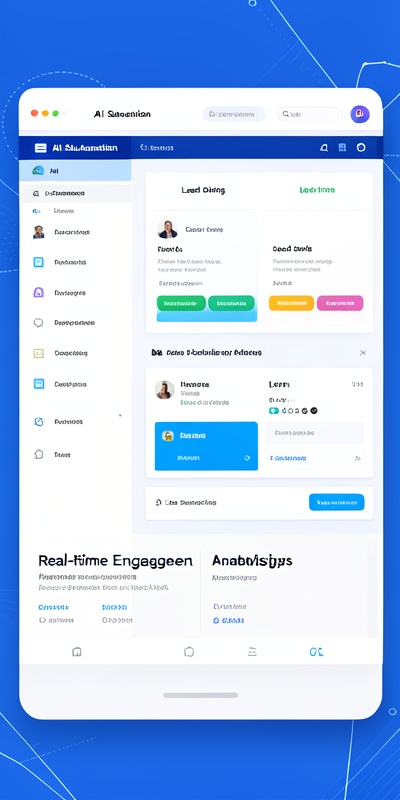
AI agents for lead qualification operate by immediately engaging with new prospects through multiple channels—website chat widgets, messaging apps, email, and even voice interactions. These intelligent systems ask qualifying questions, gather essential information, assess buying signals through Natural Language Processing (NLP), and build comprehensive lead profiles—all within seconds of the initial contact. The result is that every lead receives instant, intelligent engagement that previously required a team of SDRs working around the clock.
The AI Agent Architecture for Lead Qualification
Effective lead qualification automation requires a multi-layered AI architecture that handles various aspects of the qualification process. Understanding this architecture helps businesses deploy solutions that genuinely transform their lead handling capabilities rather than implementing superficial automation that fails to deliver meaningful results.
1Initial Engagement Layer
This layer consists of AI-powered chat widgets, voice agents, and messaging integrations that instantly greet visitors and begin the qualification conversation. These agents use conversational AI to create human-like interactions that feel natural while systematically gathering qualifying information. They can handle thousands of simultaneous conversations without degradation in quality.
2Qualification Intelligence Layer
The core AI engine analyzes responses, identifies buying intent signals, and applies sophisticated qualification frameworks. Using NLP and machine learning, these systems understand context, sentiment, and urgency in prospect communications. They can detect nuanced buying signals that simple form submissions miss, such as specific product requirements, budget discussions, or timeline constraints.
3Scoring & Routing Layer
Based on qualification data, AI systems assign dynamic lead scores that reflect each prospect's likelihood to convert. High-scoring leads receive immediate human handoffs, while others enter automated nurturing sequences. Intelligent routing ensures the right leads reach the right sales team members based on territory, expertise, and availability.
4Integration & Sync Layer
Seamless integration with CRM systems, marketing automation platforms, and sales tools ensures all qualification data flows directly into existing workflows. This layer maintains data hygiene, updates records in real-time, and triggers follow-up actions across all connected systems.
Scoring Leads via Conversational Intent Analysis
Traditional lead scoring often relies on firmographic data—company size, industry, revenue—to predict buying potential. While useful, this approach misses critical behavioral insights that conversational AI can capture. Modern lead qualification systems analyze what prospects say and how they say it to build more accurate predictive models.
Conversational intent analysis uses advanced NLP to understand the meaning behind prospect communications. When a lead asks detailed questions about pricing for bulk orders, mentions specific timeline requirements, or expresses urgency about solving a particular problem, these signals contribute to higher qualification scores. The AI can detect emotional tone, identify hesitation, and recognize enthusiasm—all factors that help prioritize leads and personalize follow-up strategies.
AI Lead Scoring Factor Analysis
- ✓ Question Complexity: Leads asking detailed technical questions demonstrate deeper engagement and higher purchase intent
- ✓ Urgency Indicators: Explicit mentions of deadlines, current problems, or time-sensitive needs correlate strongly with conversion
- ✓ Budget Discussions: Conversations that include budget parameters help identify sales-ready leads
- ✓ Competitive References: Leads comparing vendors or mentioning alternatives need immediate attention to win the opportunity

Seamless Human Handoffs in Twenty CRM
Despite the power of AI agents, successful lead qualification ultimately requires human connection for complex sales. The key to maximizing conversion lies in how effectively AI systems transition qualified leads to human sales representatives. Poor handoff processes can destroy the momentum built by AI engagement, resulting in frustrated prospects and lost opportunities.
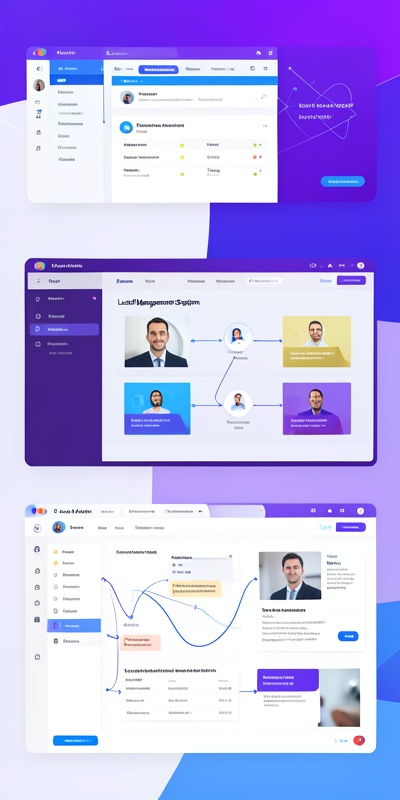
Effective human handoff strategies begin with comprehensive lead context. When AI agents transfer leads to sales teams, they provide complete conversation histories, qualification scores, identified needs, and recommended next steps. This ensures sales reps can immediately continue the relationship without forcing prospects to repeat information already shared. Modern CRM platforms support these workflows through automated task creation, smart notifications, and mobile-optimized lead cards that put critical information at sales representatives' fingertips.
| Handoff Trigger | Score Threshold | Response SLA | Routing Method |
|---|---|---|---|
| Hot Lead - High Intent | 90-100 | Immediate | Round Robin (Senior SDRs) |
| Warm Lead - Medium Intent | 70-89 | Within 15 minutes | Territory-Based |
| Cool Lead - Low Intent | 50-69 | Within 2 hours | Queue-Based |
| Nurture Lead - Research Stage | < 50 | Automated Nurture | Marketing Automation |
Measuring the Conversion Uplift from AI Lead Qualification
Implementing AI lead qualification delivers measurable improvements across key sales metrics. Organizations that deploy these systems consistently report significant gains in conversion rates, response times, and pipeline efficiency. Understanding how to measure and optimize these improvements is essential for demonstrating ROI and continuous optimization.
According to research from Salesforce's 2024 State of Marketing report covering 8,200 B2B marketers, companies using AI lead generation see 37% higher conversion rates and 52% lower cost-per-lead compared to traditional outbound methods. Additionally, research from Forrester indicates that AI-powered lead scoring can increase conversion rates by 25-30% while shortening sales cycles by approximately 30%.
Key Performance Improvements with AI Lead Qualification
"The companies that will dominate their markets in the coming years are those that treat every incoming lead as a time-sensitive opportunity rather than a routine inquiry. AI agents make this level of responsiveness possible at any scale."
Key Performance Metrics to Track
To accurately measure the impact of lead qualification automation, organizations should track a comprehensive set of metrics that capture both efficiency gains and revenue outcomes. These KPIs provide the visibility needed to optimize AI systems and demonstrate business value to stakeholders.
- ✓ Average Response Time: Track the time between lead submission and first meaningful engagement, targeting sub-minute responses for high-intent leads
- ✓ Lead-to-Opportunity Rate: Measure the percentage of leads that progress to qualified opportunities, expecting significant increases with better qualification
- ✓ Conversion Rate by Lead Source: Compare AI-qualified leads versus traditionally handled leads to quantify the qualification advantage
- ✓ Time-to-Revenue: Monitor how AI qualification affects the overall sales cycle duration from initial contact to closed deal
- ✓ Cost Per Qualified Lead: Calculate the total cost of AI systems divided by qualified leads generated to ensure efficient scaling
- ✓ Human Handoff Effectiveness: Track the quality of leads transferred to sales reps, including conversation continuation rates and rep satisfaction
Key Takeaways: Transforming Your Lead Response Strategy
The evidence is overwhelming: slow lead response times represent a critical competitive disadvantage that costs businesses significant revenue every day. Lead qualification automation powered by AI agents offers a proven solution that transforms how organizations engage prospects, qualify opportunities, and convert leads. The implementation of real-time AI lead engagement systems has consistently demonstrated the ability to increase conversion rates by 25-37%, reduce response times by over 90%, and deliver substantial improvements in sales efficiency.
📊 Bottom Line Impact
Companies that respond within one minute are 391% more likely to convert leads than those waiting even five minutes. With 78% of buyers choosing the first responder, speed to lead is not just a metric—it's a competitive imperative that directly impacts your revenue.
The path to transformation begins with recognizing that every lead represents a time-sensitive opportunity. By deploying AI agents that engage instantly, qualify intelligently, and route seamlessly, organizations can eliminate the silent revenue killer of slow response times. The investment in lead qualification automation delivers compounding returns as your AI systems learn, optimize, and continuously improve qualification accuracy over time. In today's competitive landscape, the question is no longer whether to automate lead qualification, but how quickly you can implement these systems before your competitors do.
Ready to Eliminate Your Slow Lead Response Problem?
Discover how Anagata IT Solutions can help you implement AI-powered lead qualification that responds in seconds, not hours.
Get in TouchRelated Articles
Beyond RAG: AI Information Synthesis for Enterprise Systems
Artificial Intelligence • 9 min read Beyond RAG: AI Information Synthesis for Enterprise Systems As enterprises race to…
Artificial IntelligenceDigital Twin for Founders: Scaling Decision-Making Through Agentic AI
Digital Twin for Founders: Scaling Decision-Making Through Agentic AI Artificial Intelligence • 12 min read Imagine having a…
Artificial IntelligenceThe Autonomous Finance Stack: Automating Startup Bookkeeping with n8n and Supabase
Process Automation • 12 min read The Autonomous Finance Stack: Automating Startup Bookkeeping with n8n and Supabase Transform…
Process Automation