
The landscape of enterprise automation is undergoing a fundamental transformation. While traditional workflow automation systems followed rigid, pre-programmed sequences, a new paradigm has emerged that promises genuine intelligence, adaptability, and autonomous decision-making capabilities. Agentic AI workflows represent this revolutionary approach, enabling AI systems to perceive their environment, make decisions, and execute complex tasks with minimal human intervention.
According to Gartner’s latest predictions, 40% of enterprise applications will feature task-specific AI agents by 2026, up from less than 5% today. This explosive growth trajectory signals a paradigm shift in how businesses conceptualize, implement, and benefit from automation technologies. At the forefront of this revolution stands OpenClaw, an innovative automation logic framework that is reshaping the foundations of business operations.
📋 What You’ll Learn
- 1. Understanding Agentic AI vs Generative AI
- 2. How OpenClaw Orchestrates Complex Tasks
- 3. Real-World Use Case: Automated Market Research
- 4. Building Your First Autonomous Agent Node
- 5. The Future of Human-AI Collaboration

Generative AI vs. Agentic AI: Understanding the Fundamental Differences
Before diving deeper into agentic AI workflows, it’s crucial to distinguish between two often-confused paradigms: Generative AI and Agentic AI. While both represent significant advances in artificial intelligence, they serve fundamentally different purposes and operate through distinct mechanisms.
Generative AI excels at creating content—text, images, code, music—based on patterns learned from vast datasets. ChatGPT, DALL-E, and similar models demonstrate remarkable creativity within defined parameters. However, these systems are fundamentally reactive: they respond to prompts but lack the ability to autonomously plan, execute multi-step tasks, or adapt their approach based on environmental feedback.
Agentic AI, on the other hand, represents a paradigm shift toward autonomous agency. These systems can perceive their environment, formulate plans, execute actions, and iterate based on outcomes. According to IBM’s research, enterprises are now scaling AI-enabled workflows driven by agentic AI, relying on them for improved decision-making and sophisticated automation that goes far beyond content generation.
According to McKinsey’s 2025 Global Survey on AI, organizations deploying agentic AI systems report significantly higher ROI compared to those relying solely on generative AI. The reason is clear: while generative AI enhances individual productivity, agentic AI transforms entire operational workflows, enabling continuous automation without constant human oversight.
Projected Enterprise AI Agent Integration Growth (2024-2028)
Source: Landbase Agentic AI Statistics 2026
“Agentic AI is not just the next evolution of artificial intelligence; it is already reshaping the foundations of work, creativity, learning, and enterprise automation.”
— DigitalDefynd Research, Top 100 Agentic AI Facts 2026
How OpenClaw Orchestrates Complex Tasks
OpenClaw represents a breakthrough in autonomous workflow orchestration. This open-source AI automation framework has gained significant traction, amassing over 310,000 GitHub stars and establishing itself as a leading solution for businesses seeking to implement sophisticated agentic AI workflows. With its MIT license and developer-friendly architecture, OpenClaw enables organizations to build programmable AI workflows that integrate with over 50 services while maintaining full control through self-hosted deployment.
The platform’s strength lies in its modular architecture, which consists of seven core capability modules and more than 100 pre-configured skills. These range from shell commands and API integrations to smart home control and complex data processing pipelines. What distinguishes OpenClaw from traditional automation tools is its ability to coordinate multiple AI agents working in concert, dynamically allocating resources based on task complexity and priority.
Key OpenClaw Orchestration Capabilities
- 🔄 Multi-Agent Collaboration: OpenClaw enables multiple AI agents to work together on complex tasks, dividing workloads intelligently and sharing contextual information to achieve outcomes no single agent could accomplish alone.
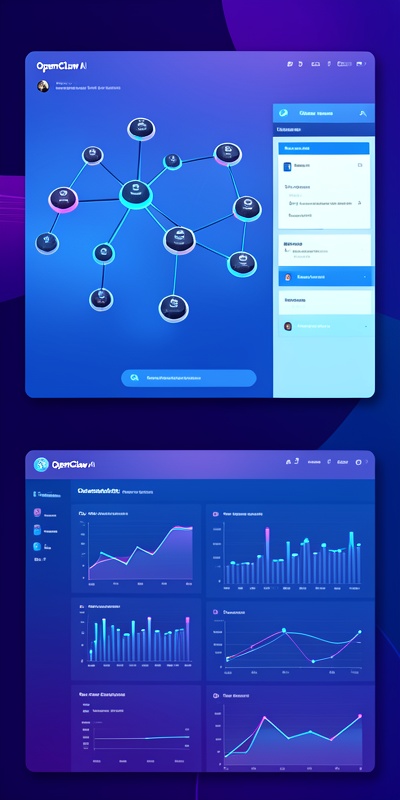
- 🎯 Dynamic UI Generation: The platform can generate user interfaces dynamically based on task requirements, providing real-time dashboards and control panels for monitoring autonomous operations.
- 🌐 Browser Control: OpenClaw agents can autonomously navigate web interfaces, extract data,填写 forms, and interact with web-based services, enabling end-to-end web automation workflows.
- 🔒 Sandbox Isolation: Security is paramount in enterprise environments. OpenClaw provides sandbox isolation for agent operations, ensuring that autonomous actions cannot compromise system integrity.
- 💾 Persistent Memory: Unlike traditional automation scripts, OpenClaw agents remember context across sessions, building personalized understanding that improves over time and reduces redundant processing.
Real-World Use Case: Automated Market Research
To illustrate the transformative power of OpenClaw’s agentic AI workflows, let’s examine a comprehensive automated market research scenario. This use case demonstrates how multiple autonomous agents collaborate to deliver insights that would traditionally require weeks of manual effort—in a matter of hours.
🎯 The Challenge
A mid-sized retail company needs to evaluate market entry opportunities in three new geographic regions. They require competitive analysis, consumer sentiment assessment, regulatory landscape review, and financial viability projections—all within a 48-hour timeframe.
Agentic Workflow Architecture
The OpenClaw-powered workflow orchestrates five distinct autonomous agents, each specializing in a specific domain:
Autonomously scrapes public databases, government statistics, and industry reports for demographic and economic data across target regions.
Maps existing competitors, analyzes their market positioning, pricing strategies, and customer reviews to identify market gaps and opportunities.
Processes social media, forums, and review platforms to gauge consumer sentiment, preferences, and pain points relevant to the product category.
Navigates legal databases, compliance requirements, and regulatory frameworks to document necessary licenses, restrictions, and compliance costs.
Correlates all findings, weights factors according to business priorities, and generates prioritized recommendations with confidence scores.
Performance Metrics
Market Research: Traditional vs OpenClaw Agentic Workflow
(Time in hours, Cost in USD, Frequency in days)
Building Your First Autonomous Agent Node
Embarking on your agentic AI journey doesn’t require extensive technical expertise. OpenClaw’s architecture is designed to be accessible while remaining powerful enough for sophisticated enterprise deployments. Here’s a practical guide to building your first autonomous agent node.
💡 Prerequisites
- Python 3.9 or higher installed
- Basic understanding of APIs and web requests
- An OpenClaw installation (one-liner script available)
- Access to at least one LLM provider (OpenAI, Anthropic, or local model)
Step 1: Installation and Setup
# Clone the OpenClaw repository
git clone https://github.com/openclaw-ai/openclaw.git
cd openclaw

# Run the one-liner installation
curl -sSL https://install.openclaw.ai | sh

# Initialize your first agent
openclaw init --name "my-first-agent"
Step 2: Define Agent Capabilities
Create a configuration file that defines your agent’s purpose, capabilities, and behavioral parameters:
# agent.yaml
name: market_researcher
model: claude-3-opus
role: autonomous_research_agent

capabilities:
  - web_search
  - data_extraction
  - report_generation
  - api_integration

behavior:
  max_iterations: 50
  feedback_loop: true
  confidence_threshold: 0.85
  error_retry_attempts: 3

tools:
  - browser_automation
  - document_parser
  - sentiment_analyzer
Step 3: Implement the Orchestration Logic
from openclaw import Agent, Workflow

# Initialize the agent
researcher = Agent(
    name="market_researcher",
    config="agent.yaml"
)

# Define the workflow
workflow = Workflow(
    name="market_analysis",
    agents=[researcher],
    orchestration="sequential"  # or "parallel" for concurrent execution
)

# Execute the workflow
result = workflow.execute({
    "query": "Analyze market potential for sustainable packaging in Southeast Asia",
    "depth": "comprehensive",
    "output_format": "executive_summary"
})

print(f"Analysis complete: {result.summary}")
print(f"Confidence score: {result.confidence}")
Step 4: Monitor and Optimize
OpenClaw provides real-time monitoring dashboards that visualize agent behavior, decision patterns, and performance metrics. Use these insights to refine your agent’s prompts and behavior parameters.
- ✅ Track iteration count: Monitor how many steps your agent takes to complete tasks
- ✅ Analyze decision paths: Review the reasoning chains your agent follows
- ✅ Identify bottlenecks: Find areas where agents struggle or require human intervention
- ✅ Refine prompts: Adjust instructions based on observed behavior
The Future of Human-AI Collaboration
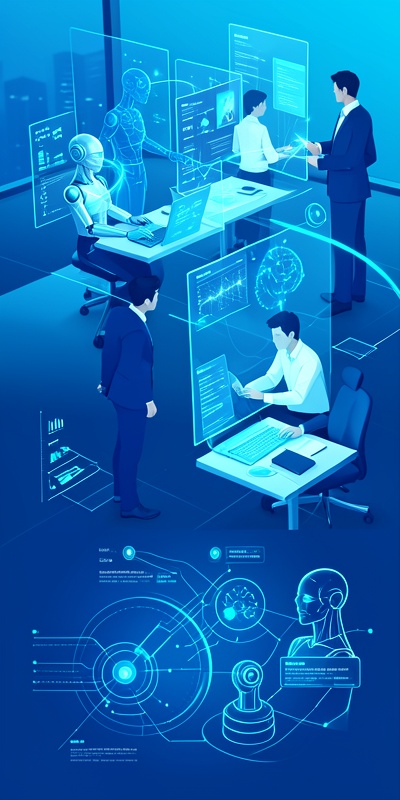
The rise of agentic AI workflows represents not a replacement of human workers, but a fundamental transformation in how humans and AI systems collaborate. According to MIT Sloan Management Review and Boston Consulting Group’s 2025 AI and Business Strategy report, successful enterprises are those that learn to harness agentic AI as a collaborative partner rather than a substitute.
Emerging Collaboration Models
The future workplace will see increasingly sophisticated human-AI collaboration patterns. OpenClaw’s architecture anticipates these developments through several key innovations:
Enterprise AI Agent Deployment Growth by Industry (2026)
Key Trends Shaping the Future
- 🔮 Agent Orchestration at Scale Future enterprises will deploy dozens or hundreds of specialized agents working in coordinated swarms, tackling complex problems through emergent intelligence.
- 🛡️ Governance and Safety As agentic AI takes on more autonomous actions, robust governance frameworks become essential. OpenClaw’s sandbox isolation and permission controls address these concerns proactively.
- 🤝 Human-in-the-Loop Evolution Rather than removing humans, agentic AI creates new roles focused on oversight, exception handling, ethical considerations, and strategic direction.
- 🌐 Cross-Organizational Agents Future agents will seamlessly collaborate across organizational boundaries, transforming supply chains, partnerships, and business ecosystems.
Key Takeaways
Unlike generative AI, agentic AI workflows autonomously execute complex tasks, enabling continuous automation without constant human oversight.
With 310K+ GitHub stars and 50+ service integrations, OpenClaw provides the infrastructure for enterprise-grade agentic workflow orchestration.
Enterprise agentic AI integration will grow from 1% to 33% by 2028—a 33-fold increase that demands immediate preparation.
Agentic AI augments human capabilities rather than replacing them, creating new opportunities for strategic value creation.
Ready to Transform Your Business Operations?
Discover how Anagata IT Solutions can help you implement cutting-edge agentic AI workflows using OpenClaw automation logic to revolutionize your enterprise operations.
Get in TouchRelated Articles
Beyond RAG: AI Information Synthesis for Enterprise Systems
Artificial Intelligence • 9 min read Beyond RAG: AI Information Synthesis for Enterprise Systems As enterprises race to…
Artificial IntelligenceDigital Twin for Founders: Scaling Decision-Making Through Agentic AI
Digital Twin for Founders: Scaling Decision-Making Through Agentic AI Artificial Intelligence • 12 min read Imagine having a…
Artificial IntelligenceThe Autonomous Finance Stack: Automating Startup Bookkeeping with n8n and Supabase
Process Automation • 12 min read The Autonomous Finance Stack: Automating Startup Bookkeeping with n8n and Supabase Transform…
Process Automation