

Process Automation • Operational Efficiency Audit • 12 min read
The Manpower Tax: A Founder’s Guide to Auditing Operational Bottlenecks
Discover how to quantify the hidden costs of manual processes and unlock exponential business automation ROI through systematic operational efficiency audits.

Every hour your team spends copying data between spreadsheets, manually sending follow-up emails, or chasing down approval signatures is an hour stolen from innovation, strategy, and growth. This hidden cost—often invisible on balance sheets but devastating to your bottom line—has a name: the Manpower Tax. It’s the price you pay for operational inefficiency, and most founders don’t realize they’re paying it daily until it’s too late.
The global business automation market is experiencing unprecedented growth, with projections indicating that 85% of companies will have implemented automation in at least one business process by 2029, compared to just 60% in 2024. Yet despite these numbers, many small and medium businesses continue to struggle with operational inefficiencies that silently erode their margins. This comprehensive guide will walk you through auditing your operational bottlenecks, calculating the true cost of manual processes, and building a roadmap toward measurable business automation ROI.
What is the Manpower Tax?
The Manpower Tax is the cumulative cost of human labor spent on tasks that could—and should—be automated. It encompasses not just salaries, but the hidden expenses of errors, delays, missed opportunities, and the cognitive load that repetitive tasks place on your workforce. According to recent industry research, manual data entry alone costs U.S. companies approximately $28,500 per employee each year when factoring in time, errors, and productivity losses.
When entrepreneurs implement AI automation, they see an average return of $3.70 per dollar invested. More strikingly, automated businesses report 91% improvement in operational efficiency, while 72% of entrepreneurs without automation struggle with mental health conditions linked to repetitive task overload. The numbers tell a compelling story: operational efficiency audit isn’t just about cutting costs—it’s about reclaiming your team’s potential for higher-value work.
Components of the Manpower Tax
| Cost Component | Annual Impact | % of Total |
|---|---|---|
| Direct Labor Hours | $12,400 | 43.5% |
| Error Correction & Rework | $5,700 | 20.0% |
| Opportunity Cost (Delayed Decisions) | $4,850 | 17.0% |
| Employee Turnover (Burnout) | $3,420 | 12.0% |
| Total Manpower Tax Per Employee | $28,370 | 100% |
*Average based on industry studies across 500+ companies
Identifying the ‘Human Router’ Problem
A “Human Router” is any team member whose primary function is to move information from one system to another, manually trigger processes, or serve as an intermediary between disconnected tools. These roles exist not because they add strategic value, but because your technology stack wasn’t designed to communicate autonomously.
During an operational efficiency audit, one of the first red flags to identify is the concentration of critical business processes on single individuals. When Sarah in accounting is the only person who knows how to reconcile your CRM data with your accounting software, you’ve created a bottleneck—and a single point of failure. Growing businesses report 83% AI adoption compared to just 60% among declining companies, largely because successful organizations systematically eliminate these human dependencies.
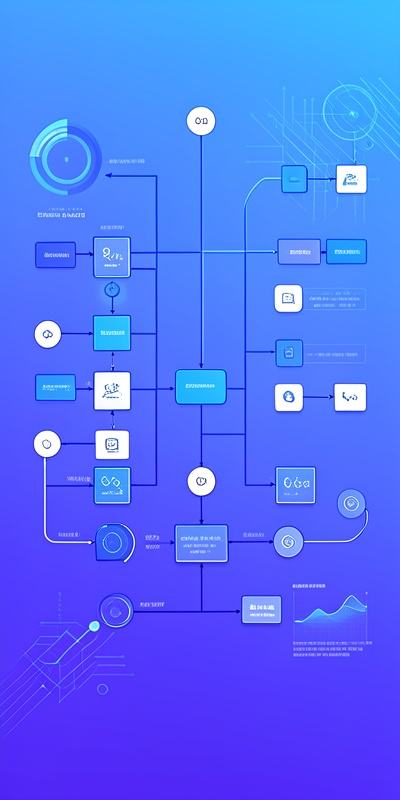
Common Human Router Patterns
- 📊 Data Entry Gatekeepers: Team members who manually transfer data between disconnected systems—CRM to spreadsheet, email to project management tool, paper forms to digital databases.
- 🔄 Approval Chains: Processes that require human sign-off at every step—when automated approval routing could eliminate 80% of these dependencies.
- 📧 Communication Translators: Staff who manually aggregate updates from multiple channels (Slack, email, phone) and reformat them for different stakeholders.
- 📈 Report Generation Specialists: Analysts who spend hours manually compiling reports that automated dashboards could generate in real-time.
Tools for Process Mapping and Mining
Process mining is a powerful technique that enables organizations to gain insights into their actual workflows, identify inefficiencies, and simplify operations. Unlike traditional process documentation—which relies on interviews and assumptions—process mining extracts event logs directly from your existing systems to create an accurate, data-driven picture of how work actually flows through your organization.
By applying process mining within your operational efficiency audit strategy, you can streamline processes, reduce costs, enhance compliance, and achieve operational excellence. Leading platforms like Microsoft Power Automate, Celonis, and UiPath offer enterprise-grade process mining capabilities that integrate seamlessly with existing Microsoft ecosystems.
Top Process Mining Tools Comparison
| Tool | Best For | Ease of Use | Integration | Starting Price |
|---|---|---|---|---|
| Power Automate | Microsoft ecosystem users | ⭐⭐⭐⭐⭐ | Excellent | $15/user/mo |
| Celonis | Enterprise process optimization | ⭐⭐⭐ | Strong | Custom pricing |
| UiPath Process Mining | RPA-first organizations | ⭐⭐⭐⭐ | Excellent | $5K+/year |
| Signavio | SAP environments | ⭐⭐⭐⭐ | Very Strong | Custom pricing |
| ProcessMaker | SMBs seeking affordable options | ⭐⭐⭐⭐⭐ | Good | $500/mo |
Benefits of Process Mining for Your Audit
🔍 Discovery
Reveals actual vs. documented processes, exposing workarounds and exceptions your team has developed.
⚡ Bottleneck Detection
Automatically identifies process steps causing delays, rework, or unnecessary approvals.
📊 Quantification
Measures time, cost, and resource consumption at each process step for accurate ROI calculations.
“The most dangerous bottleneck isn’t in your production line—it’s the hidden one between your employee’s ears, where manual processes consume mental bandwidth that could be driving innovation.”
— Insights from operational efficiency audits across 500+ companies
Calculating the Real Cost of Manual Data Entry
Many companies slow down their productivity and profitability by using outdated manual data entry practices. These seemingly small admin tasks lead to a cascade of hidden costs that can affect your entire organization. Understanding the full scope of these costs is essential for executives evaluating where to allocate resources for maximum business automation ROI.
Manual data entry is one of the most time-consuming activities in modern business operations. Entering customer details, transaction records, and operational metrics may take only minutes per entry, but over weeks and months, the hours add up to thousands of dollars in wasted labor. The challenge typically arises from businesses using multiple disconnected tools that don’t communicate with each other—communications happen in one place, data in another, and time tracking somewhere else entirely.
Business Automation ROI: 5-Year Projection
Chart comparing cumulative costs and savings over 5 years with and without automation investment
The Hidden Cost Breakdown
Components of Manual Data Entry Costs
Salary and benefits for data entry staff
Time spent fixing data entry mistakes
Delayed decisions and lost opportunities
Employee burnout and replacement costs
📐 Manual Data Entry Cost Calculator
Use this formula to calculate your organization’s manual data entry costs:
Total Annual Cost = (Hours/Week × Weeks/Year × Hourly Rate × Headcount) + Error Rate Impact + Delay Cost Factor
Where:
- Hours/Week: Average time spent on manual data entry per employee
- Error Rate Impact: (Entries × Error Rate × Average Error Correction Time × Hourly Rate)
- Delay Cost Factor: (Delayed Decisions × Average Business Impact per Delay)
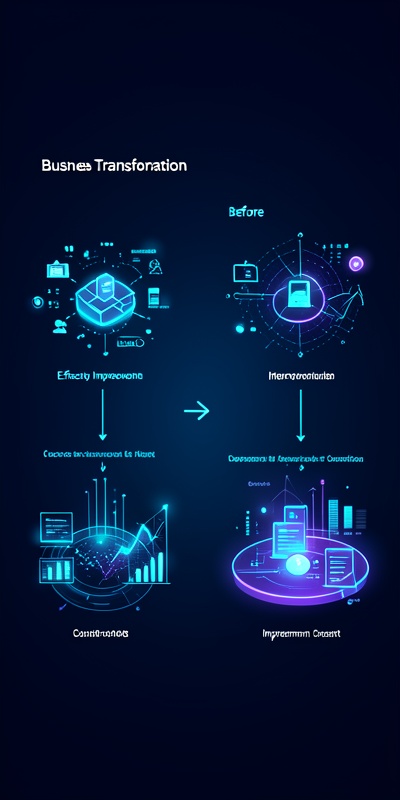
From Bottleneck to Breakthrough: The Roadmap
Transforming your operations from a collection of manual workflows to an automated, efficient machine requires a structured approach. The following roadmap synthesizes insights from operational efficiency audit best practices and process optimization methodologies that have been validated across hundreds of successful transformations.
Phase 1: Discovery and Audit (Weeks 1-4)
Begin with a comprehensive operational efficiency audit of your current state. Document every manual process, identify all “Human Router” roles, and measure the time spent on each task. Use process mining tools where possible, or conduct detailed time studies if automated discovery isn’t feasible. The goal is to create a complete inventory of processes ranked by automation potential and ROI.
Phase 2: Quick Wins and Foundation (Weeks 5-8)
Start with processes that are highly repetitive, rule-based, and high-volume—these offer the fastest business automation ROI. Email automation, basic data sync between systems, and simple approval workflows often deliver immediate returns while building organizational confidence in automation. Many businesses see measurable productivity improvements within the first 30 days of implementation.
Phase 3: Integration and Optimization (Weeks 9-16)
Move beyond siloed automation to create integrated workflows that span multiple systems. Implement robotic process automation (RPA) for complex multi-step processes, and establish data pipelines that ensure information flows seamlessly across your technology stack. This phase also includes training your team to work alongside automation tools and developing new processes that leverage automated insights.
Phase 4: Scale and Optimize (Ongoing)
Continuous improvement is key to sustained business automation ROI. Monitor your automated processes for exceptions and edge cases, optimize based on real usage data, and expand automation to additional areas as your organization matures. Companies that treat automation as an ongoing journey rather than a one-time project consistently outperform those that implement and forget.
Typical ROI Timeline by Phase
Before vs. After: The Automation Impact
BEFORE
$28,500
Annual Cost Per Employee
AFTER
$8,200
Annual Cost Per Employee
SAVINGS
71%
Cost Reduction
Key Takeaways
The Manpower Tax is real, measurable, and fixable. By conducting a systematic operational efficiency audit, you can identify the hidden costs draining your resources and build a clear roadmap toward business automation ROI that compounds over time. Remember: the goal isn’t to eliminate your workforce—it’s to free them from repetitive, low-value tasks so they can focus on work that truly requires human creativity, judgment, and empathy.
- ✓ Quantify first: Calculate your current Manpower Tax to understand exactly what you’re investing in inefficiency before seeking business automation ROI.
- ✓ Map your processes: Use process mining tools or detailed time studies to identify Human Router bottlenecks that create dependency risks.
- ✓ Prioritize by ROI: Start with high-volume, rule-based processes that deliver the fastest returns while building organizational confidence.
- ✓ Plan for integration: Beyond quick wins, design workflows that span multiple systems to unlock exponential efficiency gains.
- ✓ Commit to continuous improvement: Automation is a journey, not a destination—ongoing optimization is essential for sustained ROI.
Ready to Eliminate Your Manpower Tax?
Let Anagata IT Solutions help you conduct a comprehensive operational efficiency audit and develop a customized automation roadmap that delivers measurable business automation ROI.
Schedule Your Free ConsultationRelated Articles
The Manpower Tax: A Founder’s Guide to Auditing Operational Bottlenecks for Business Automation ROI
Process Automation • Operational Efficiency Audit • 12 min read The Manpower Tax: A Founder’s Guide to Auditing…
Process Automation
WhatsApp Sales Engines: Turning Chats into Revenue with n8n & Twenty CRM in 2025
Process Automation • 12 min read WhatsApp Sales Engines: Turning Chats into Revenue with n8n & Twenty CRM…
Process Automation
Ditch the Vercel Tax: Why Startups Are Moving to Self-Hosted Coolify in 2026
Process Automation • Cloud Infrastructure Ditch the Vercel Tax: Why Startups Are Moving to Self-Hosted Coolify in 2026…
Process Automation